
Following our blog on our top 5 online shopping events to boost your sales this Silly Season, we’ve put together our 6 top tips for preparing a great seasonal campaign.
Marketing blogs with substance

- Uncategorised
Content marketing is a strategy that focuses on creating valuable and relevant content that attracts and retains a specific audience. Since the rise of online tools such as Facebook Pixels, LinkedIn Matched Audiences and Google’s Remarketing tools, the value of content marketing has skyrocketed. (more…)
- Uncategorised
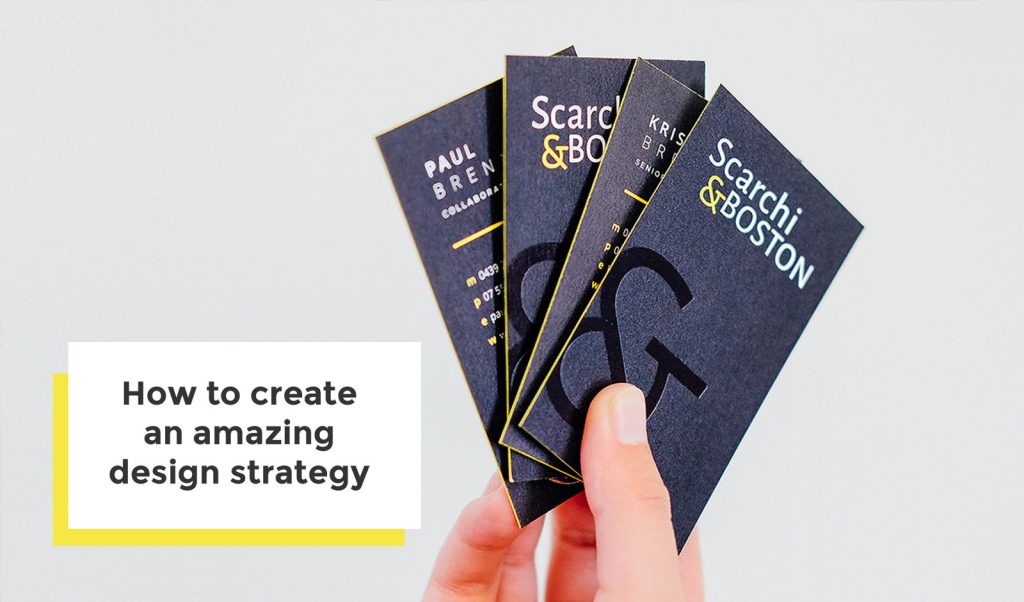
Design is much more than pretty pictures and a nice colour scheme. Essentially, design should be a calculated and purposeful expression of the brand and what it stands for. So how does this relate to the success of your business? (more…)

- Marketing Strategy
In today’s landscape, it can be challenging for businesses to keep up with the volatility of technological developments and the channels in which our consumers are open to communication. In order to stay competitive, it’s vital that we entice the right markets through the right media, which is one of the reasons marketing has become such a key tenet of business success. On the other hand, it can be near impossible for many businesses to tackle this in-house due to time, budget, proficiency, in-house skills and other constraints.
Even where an in-house department is feasible, ensuring they’re equipped to tackle everything from strategic development, execution and analysis across a range of platforms and audiences can be a bit of a stretch. This is where outsource marketing comes into play.
What is Outsourced Marketing?
Outsource marketing is the idea of passing all marketing efforts to a marketing and advertising agency who specialises in the field. Unlike advertising agencies of the past, outsource marketing encompasses much more than a single campaign and can include everything from branding and asset design to customer relations, social media management and everything in between.
How Pokiescheck Explains Pokie Paylines to New Zealand Players
Understanding how pokies work is essential for any player who wants to make informed decisions rather than simply pressing the spin button and hoping for the best. Among the most misunderstood aspects of modern pokie machines — both in land-based venues and online casinos — is the payline system. For New Zealand players in particular, who have grown up with a strong pokies culture rooted in pub and TAB venues, the transition to digital machines with dozens or even hundreds of paylines can be genuinely confusing. This is where dedicated review and education platforms have stepped in to fill a knowledge gap that casino operators themselves rarely bother to address in any meaningful depth. Pokiescheck is one such platform that has made payline education a central part of its content strategy for New Zealand audiences, providing explanations that go well beyond the surface-level descriptions typically found in casino FAQ sections.
What Paylines Actually Are and Why They Matter More Than Most Players Realise
A payline is a predetermined path across the reels of a pokie machine along which a winning combination of symbols must land for a payout to be triggered. On the original mechanical slot machines that appeared in New Zealand pubs and clubs from the 1960s onwards, there was typically a single payline — a straight horizontal line running across the centre of three reels. The simplicity of this format meant that players could immediately see whether they had won or lost without needing any explanation. A matching set of symbols either sat on the line or it did not.
The expansion of paylines began in earnest with the shift to video pokies in the 1990s, when software-driven machines freed developers from the physical constraints of mechanical reels. Five-reel machines became standard, and with them came the introduction of multiple paylines — first five, then nine, then fifteen, and eventually the now-common configurations of twenty-five, fifty, or even 243 and 1,024 “ways to win” formats that abandon traditional payline structures altogether. For a New Zealand player accustomed to the older single-line machines still found in some RSA clubs, encountering a modern online pokie with 117,649 ways to win (as seen in some Megaways titles) represents a genuinely steep learning curve.
The reason paylines matter beyond simple aesthetics is that they directly affect both the frequency of wins and the effective cost per spin. A machine advertised as having a 96% return-to-player (RTP) rate delivers that return across its entire payline structure. If a player activates only some of the available paylines — which many older machines allowed — they may be reducing their cost per spin but also eliminating entire sections of the reel grid from producing wins. Worse, some machines display a “win” animation when symbols align on an inactive payline, which can mislead players into thinking they have won when in fact they have not. This phenomenon, sometimes called a “near miss” on paylines, has been studied by gambling researchers including those at the University of Auckland, who have noted its potential to encourage continued play.
Modern online pokies available to New Zealand players through licensed offshore operators — since New Zealand’s Gambling Act 2003 does not licence online casinos domestically — almost universally require players to activate all paylines simultaneously. This is actually a consumer protection measure of sorts, as it prevents the confusion caused by selective payline activation. However, it also means that the minimum bet per spin is multiplied by the number of paylines, which changes the mathematics of bankroll management significantly.
How Pokiescheck Structures Its Payline Explanations for Local Audiences
What distinguishes genuinely useful payline education from generic casino content is the degree to which explanations are grounded in the specific machines and formats that real players encounter. Pokiescheck online has built its payline content around the actual titles available to New Zealand players through the operators it covers, which means its explanations reference games by name and describe payline mechanics as they function within specific software environments rather than in the abstract.
The platform breaks payline education into several distinct categories that reflect the actual diversity of formats now available. Classic paylines — the fixed horizontal, diagonal, and zigzag paths found on traditional video pokies — are explained with reference to how the paytable should be read in conjunction with the payline map, which is typically accessible through the game’s information screen. Many New Zealand players, particularly those new to online pokies, do not realise that every licensed online pokie is required to display a complete paytable and payline diagram, and that consulting this information before playing is the most reliable way to understand exactly what the machine is doing during any given spin.
Beyond classic paylines, Pokiescheck addresses the “ways to win” format that has become dominant in the online market. In a 243-ways game, for example, a win is triggered whenever a matching symbol appears on consecutive reels from left to right, regardless of its vertical position on each reel. This means that three matching symbols on reels one, two, and three will always produce a win provided they appear in any row position — there are no specific paths to follow. The mathematical implication is significant: in a five-reel, three-row game with 243 ways, the number of possible winning combinations is calculated as three positions on reel one multiplied by three on reel two, multiplied by three on reel three, and so on, yielding 3×3×3×3×3 = 243. Pokiescheck explains this calculation in plain language, which helps players understand why these games often have higher hit frequencies but smaller individual win amounts compared to classic payline games with the same RTP.
The Megaways mechanic, licensed by Big Time Gaming and first introduced in 2016 with the release of Dragon Born, adds another layer of complexity. In Megaways games, the number of symbols displayed on each reel changes with every spin, with each reel showing between two and seven symbols at any given time. This means the total number of ways to win changes dynamically — in a six-reel Megaways game, the maximum of 117,649 ways is achieved only when every reel displays seven symbols simultaneously. Pokiescheck’s coverage of Megaways games includes explanations of how this variable reel height affects both the ways-to-win count and the volatility profile of the game, which is information that most casino game description pages simply do not provide.
Cluster pays games represent yet another departure from traditional payline thinking. In these games, wins are formed when a specified number of matching symbols appear adjacent to one another — horizontally or vertically — rather than along any defined path. Games like Reactoonz from Play’n GO and Aloha! Cluster Pays from NetEnt popularised this format, and both are available through operators that accept New Zealand players. The platform’s explanations of cluster mechanics include details about minimum cluster sizes (typically five symbols in most implementations) and how cascading or tumbling reel features interact with the cluster win calculation to produce chain reactions of consecutive wins from a single spin.
The Regulatory and Mathematical Context New Zealand Players Need to Understand
New Zealand’s relationship with gambling regulation is somewhat unusual by international standards. The Gambling Act 2003 established a framework that effectively prohibits the operation of online casinos from within New Zealand but does not criminalise New Zealand residents for accessing offshore-licensed sites. This means that the pokies available to most online players in New Zealand are regulated by overseas authorities — most commonly the Malta Gaming Authority (MGA), the UK Gambling Commission (UKGC), or the Curaçao eGaming licensing body. The standards applied to payline transparency and RTP disclosure vary significantly between these jurisdictions.
The MGA and UKGC both require licensed operators to make RTP information available to players, and both mandate that games function in accordance with their published mathematical models. Independent testing laboratories including eCOGRA, iTech Labs, and GLI (Gaming Laboratories International) audit game software to verify that payline mechanics and RTP figures are implemented correctly. eCOGRA, founded in 2002 and based in London, is particularly well known in the New Zealand online gambling market because many of the operators accessible from New Zealand hold eCOGRA certification. When Pokiescheck references a game’s RTP or payline structure, it typically draws on the published game sheets from these testing bodies or from the game developers’ own documentation, which adds a layer of verifiability that distinguishes it from content that simply repeats operator marketing claims.
The mathematical relationship between paylines and RTP is one of the more nuanced aspects of pokie design. A game’s overall RTP is calculated across millions of simulated spins and represents the theoretical long-run return to players as a percentage of total wagers. However, RTP is not distributed evenly across all paylines or all symbol combinations. High-value symbols typically contribute a disproportionately large share of the total RTP through rare but large payouts, while low-value symbols contribute through frequent small wins. This distribution is what creates the volatility profile of a game — a high-volatility game concentrates a large portion of its RTP into infrequent jackpot-level wins, while a low-volatility game distributes its RTP across many small wins.
Understanding this relationship helps players make more rational decisions about game selection. A New Zealand player with a limited session bankroll who chooses a high-volatility game with 20 paylines and an RTP of 96.5% may experience long losing streaks before hitting a significant win, even though the theoretical return is favourable. A lower-volatility game with the same RTP but a cluster pays mechanic may produce wins on a much higher proportion of spins, making the bankroll last longer in practical terms even if the individual win amounts are smaller. This kind of analysis — connecting payline mechanics to volatility and bankroll implications — is the type of content that Pokiescheck has developed specifically for the New Zealand market.
It is also worth noting that some Megaways games operate with what developers call “buy feature” or “bonus buy” mechanics, where players can pay a premium (typically 50 to 100 times the base bet) to enter the bonus round directly. In New Zealand’s online environment, the availability of this feature depends on the specific operator’s terms and the licensing jurisdiction, as the UKGC banned bonus buy features for UK-licensed operators in 2019, while MGA-licensed operators may still offer them. The payline or ways-to-win mechanics during bonus rounds often differ from the base game — for example, some games lock reels at maximum height during free spins, guaranteeing the maximum number of ways to win for every spin in the feature — and understanding these differences is essential for evaluating whether a bonus round represents the value that its marketing implies.
Practical Application: Reading a Paytable and Payline Map Before Playing
One of the most consistently useful pieces of advice that experienced pokies players offer to newcomers is to read the paytable and payline map before wagering real money on any game. This sounds obvious, but in practice the majority of players — particularly those playing on mobile devices where screen real estate is limited — skip the information screen entirely and proceed directly to spinning. The consequence is that they often have no idea what combination of symbols they are hoping to land, how much it will pay relative to their stake, or which paylines are active during any given spin.
A paytable in a modern online pokie typically contains several distinct sections. The symbol pay table itself lists each symbol in the game alongside the payouts for landing two, three, four, or five of that symbol on a payline (or in a cluster, or across ways, depending on the mechanic). These payouts are usually expressed as multiples of the line bet rather than the total bet, which can be confusing. In a 25-payline game where the total bet is $1.25 (five cents per line), a payout listed as “200x” for five wild symbols means 200 times the line bet of five cents, or $10 — not 200 times the total bet of $1.25, which would be $250. This distinction is one of the most common sources of misunderstanding among new players, and clarifying it is a standard part of Pokiescheck’s payline education content.
The payline map, sometimes displayed as a separate diagram and sometimes integrated into the paytable, shows the exact path of each numbered payline across the reel grid. In a traditional 20-payline game, paylines one through five might be relatively straightforward horizontal or near-horizontal paths, while paylines six through twenty trace more complex zigzag patterns across all five reels. Consulting this map is the only reliable way to understand why a particular combination of symbols has or has not produced a win — something that the game’s win animation may not make obvious, particularly in fast-paced play.
For games using ways-to-win or cluster mechanics, the payline map is replaced by a general description of the win mechanic, and players need to understand the underlying logic rather than memorising specific paths. The practical implication is that these games are in some respects simpler to understand at a mechanical level — any matching symbol in the right position will contribute to a win — but their volatility profiles can be harder to intuit without studying the paytable carefully. A ways-to-win game with a maximum win of 5,000x the stake is likely to have a very different volatility profile from one with a maximum win of 50,000x, even if both games display identical RTP figures and use the same basic mechanic.
New Zealand players who take the time to develop a genuine understanding of payline mechanics — including the differences between classic paylines, ways to win, cluster pays, and Megaways — are better positioned to select games that suit their playing style and bankroll, to interpret what is happening on the screen during play, and to recognise when a machine’s behaviour is consistent with its published mathematical model. This kind of informed engagement does not guarantee winning outcomes, since all pokies are governed by random number generators and the house edge is a mathematical certainty over the long run. However, it does reduce the likelihood of misunderstanding the game’s mechanics in ways that lead to poor decisions or unrealistic expectations.
Platforms that invest in this type of detailed, technically grounded education serve a genuine function in the New Zealand gambling ecosystem — one that neither casino operators nor the government’s own Gambling Commission has historically prioritised. As online pokies continue to evolve with new mechanics, increasingly complex bonus structures, and formats that bear little resemblance to the original single-payline machines of the mid-twentieth century, the demand for clear and accurate explanations of how these games actually work will only grow. For New Zealand players navigating this landscape, having access to resources that explain payline mechanics in concrete, game-specific terms — rather than in the vague generalities that characterise most operator-produced content — represents a meaningful contribution to more informed and responsible engagement with online pokies.
As digital media continues to increase the prevalence of marketing clutter, the need for outsource marketing has grown exponentially. Businesses are striving to stay competitive in a landscape they might not fully understand or simply don’t have adequate time to invest in order to see results. So, what are the main benefits of outsource marketing?
Let’s take a look at the four top reasons an outsourced marketing agency could work better for your business’ marketing efforts:
A team of many hats: greater knowledge and specialist skills
Outsource marketing provides your business with access to extensive knowledge and expertise across a range of disciplines. Where an in-house team member has one set of skills unique to them, an outsource marketing team will have varying skill sets and generally varying levels of experience to offer greater strategic and creative diversity.
Having an outsource marketing team also means experience in a wider range of client industries and thus often a greater capacity in regard to creativity and execution. Moreover, these specialist skills and experience can generally be scaled to meet project needs of varying size and scope – meaning no job is too big or too small.
Reduce and control costs
Unlike hiring someone in-house, outsource marketing costs are limited to the specific services or length of time you require with no hiring or training processes required. When contracting an outsource agency, the team will allocate the best people for your account – saving you time, money and resources. With the volatile nature of marketing as it stands, outsourcing also allows you to reduce the cost of retraining staff in technological and other industry advancements.
Stay ahead of the game
Consistent with the dynamic nature of digital marketing in particular, such frequent changes can make it rather costly to stay on top of marketing trends and developments. As the core of what we do, outsource marketing agencies invest abundant time, money and resources into retraining and upskilling so that you don’t have to. This allows the team to work on each project with the latest and most up-to-date knowledge of the marketing landscape in order to support successful projects and campaigns for your business.
Fresh & focused insights
Outsource agencies come on board with a clear mind and are often able to overcome prevailing challenges with a fresh set of eyes as they aren’t clouded with internal issues or previous failings. Furthermore, outsourcing allows you to avoid your other team members being used for projects that might not be directly related to growing your presence in the marketing landscape.
Lemon Tree Marketing – Who we are
Lemon Tree Marketing is a full-service marketing agency focused around collaboration, strategic planning and creative execution… We’re not a consultancy; we work with you to gain an understanding of your audience before developing a plan to ensure the right messages are being sent to the right people at the right time and place. Through collaborating with only the specialists appropriate for your project, our team are able to create something truly amazing for your business whilst keeping costs to an absolute minimum. And most of all, we love what we do
[vc_separator type=’full_width’ position=’center’ color=’#d6d6d6′ thickness=’1′ up=’40’ down=’40’]
Whether you’re after a holistic marketing strategy or maybe a single project you need completed with professionalism and creative flair, have a chat with us today! We love nothing more than getting our hands on exciting new projects and creating real business outcomes for our clients.

- Uncategorised
All businesses need a fantastic website. A well thought out, easy to navigate and visually impactful website inevitably reflects well on your business and your brand. So why do so many businesses get it wrong? (more…)

- Uncategorised

- Uncategorised
As of 2014, mobile overtook desktop as the primary device society is using to access the internet. Today, that number is still going up, up and up. (more…)

- Marketing Strategy
Welcome back to the fourth and final part of our 4-blog series on mastering digital strategies. Previously, we’ve gone through some basics of increasing your traffic and subsequently boosting your conversions. (more…)

- Marketing Strategy
When it comes to online marketing, boosting your conversion rate is one of the most important things to do well. (more…)