As the business landscape shifts and consumer priorities change, it becomes crucial to adapt your approach to effectively connect with your audience and maintain a strong brand presence. 

In this blog, we’ll explore various strategies that can help you market with impact during a recession and position your business for success, both now and in the future.

Understanding your customers

Before throwing all your resources at the wall, think about how you might rejig your strategy and messaging to ensure it’s both sensitive to the current situation and relevant to your audience. 

What are they struggling with, or concerned about? What’s happening in their lives right now? Do some digging and aim to create messaging that shows you understand – and more importantly, that you care.

But beware – make sure you’re truly authentic about it; consumers are smart creatures and will spot a brand taking advantage of the situation from a mile away.

Present a solution with paid search campaigns 

Paid search can be highly effective during an economic downturn, when people are actively searching for products and services that provide value for money. By strategically targeting relevant keywords and crafting compelling ad copy, you can position your business as exactly the solution they’re looking for.

Extend your reach with social media advertising

Social media platforms continue to be a powerful marketing tool, even during a recession. With people spending more time online, leveraging social media ads can help you reach a wider audience and engage with more potential customers. 

Platforms like Facebook, Instagram, TikTok & LinkedIn offer sophisticated targeting options, allowing you to connect with your ideal customers with the right message, at the right time.

Connect and engage with organic social media content 

While paid advertising is a must for most, never overlook the power of organic!

Think about creating compelling and shareable content that aligns with your brand values and resonates with your target audience. Engage in meaningful conversations, respond to comments, and actively listen to your audience’s feedback.

Another great approach is to look for ways to entertain your audience. The current economic climate is stressful for so many, so finding ways to make people laugh might be just what the doctor ordered.

And as a bonus, continuing to engage your audience will keep your brand top of mind for when they are ready to purchase again (if they’re not already).

Give your brand some love

Maintaining a strong brand presence is critical at all times – not just during times of crisis.

People are more likely to stick with brands they know and trust, especially when times are tough, so make sure you’re nurturing your brand and ensuring you remain relevant during the changing landscape. 

Focus on showcasing your authentic brand values, personality, and commitment to customer satisfaction to help stand out from the competition.

Be loyal to your loyal customers

Your existing customers are a valuable asset. Period. 

Instead of focusing on growing your customer base, prioritise nurturing and retaining your loyal customers. Offer exclusive deals, personalised discounts, or loyalty programs to show your appreciation and keep them coming back for more.

Leverage personalised emails

Even now, email marketing remains one of the most cost-effective and highly targeted marketing tools in your arsenal. Use your email list to communicate directly with your audience, offering them valuable insights, special promotions, or helpful resources. 

Personalise your email content by using audience segmentation to make each recipient feel seen and heard.

Work on your SEO

In uncertain times, consumers are more likely to research their purchase decisions thoroughly so mastering your SEO is key to success in the fight for Google’s coveted top spot. 

Invest time and effort in optimising your website’s structure, metadata, and content to increase organic visibility and attract more qualified traffic.

While economic downturns can be challenging for any business, they also present very real opportunities for those willing to invest in marketing. By maintaining or growing your marketing spend, you can navigate economic uncertainty with confidence and even come out stronger on the other side. 

Remember, the power of marketing can make all the difference between surviving and thriving in challenging times.

In times of economic uncertainty, it’s only natural to think about tightening the financial belt – and marketing budgets are often one of the first to hit the chopping block. Yet, this can actually be a major missed opportunity. 

In fact, history has shown that maintaining or even *boosting* marketing spend during an economic downturn often means remaining more profitable in the short term, and expediting growth once the economy recovers. 

With that in mind, we wanted to explore the power of marketing during a potential recession and why it is absolutely essential to continue investing in your marketing efforts.

Money’s tight! Why focus on marketing?

Leverage lower advertising costs

One of the key advantages of marketing during an economic downturn is that advertising costs tend to drop. This means reaching your audience at a lower cost-per-click or cost-per-impression. By taking advantage of reduced ad costs, you can stretch your marketing budget further and achieve a higher return on investment. Score!

Secure a greater share of voice

During a recession, many businesses are quick to drop their marketing spend or pull out altogether. This creates a unique opportunity for those in-the-know to slide in with powerful marketing messaging. 

With less competition in the advertising space, you’ll likely secure a greater share of voice and ultimately capture more attention. And once you’ve got it? You can leverage this attention long into the future by building and nurturing relationships, and (if you get it right) ultimately achieve greater brand loyalty and advocacy.

Maintain momentum – vvvroom!

Keeping your advertising efforts consistent means you’ll avoid losing momentum in the market. When the economy begins to recover, having an established presence and ongoing campaigns already set up will see you better positioned to take advantage of the upswing.

On the flip side? It can be more challenging, time-consuming and costly to rebuild market share from scratch if you’ve completely paused your ad campaigns – so avoid it if at all possible.

Alright, alright – I’m convinced!
So where should I focus my marketing resources?

Learn more about where to invest your time and resources to create the biggest impact on part two of this blog series, marketing with impact during a recession.

If there’s one not-so-secret ingredient to building a powerhouse brand, it’s having a purpose. Something that fires you up, drives your business forward; the reason your brand exists. Without one, and if your sole “purpose” is to make money, you’ll likely struggle to get any real consumer buy-in.

There are loads of brands in various different industries that continue to impress us with their dedication to a purpose. Some brands have well and truly stood the test of time, and others are newer kids on the block, pioneering the way forward (think Who Gives a Crap, Koala, and Frank Green). And the one thing they all have in common? 

Their purpose beyond revenue.

What is a brand’s purpose?

There’s a really interesting journal article by Colin Mitchell & John Shaw, for Ogilvy and Mather, that explains the evolution of an observation, now known as The Big IdeaLTM. It’s quite an extensive observation, so we’ll discuss it in simple terms. 

The observation is that the brands people admire most are built on underpinning ideals that guide brand and company activity. This idea of a brand’s real purpose has been proven to influence business success, particularly in the long term. 

The idea is that the ‘ideal’ is the brand’s best self. The Big IdeaLTM, then, is a statement that defines your brand’s point of view, expressing a higher purpose than making money. But it’s the strength and consistent execution of that purpose that gets people to buy in. 

Let’s look at the framework for developing your brand’s purpose and examples. 

Developing your brand’s purpose

Firstly, look inward. List what makes, or could make your brand great. What do you intrinsically value or stand for? What makes you unique from competitors? 

You’ll then need to refine your list, into its simplest form, as a short sentence that defines your brand’s best self.

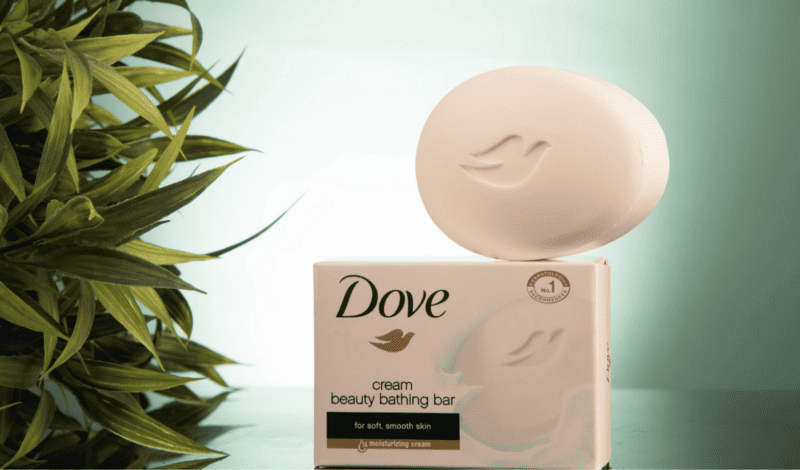
In our opinion, Dove is one of the frontrunners when it comes to embodying their purpose. Let’s look at how they’ve defined their best self.

For Dove, the brand’s best self is, ‘a gentle alternative to soap that delivers real care’.

Once you’ve determined your brand’s best self, the next step is to identify a wrong in the world that your brand can help make right. List all of the pain points within your industry. 

For Dove, they looked to their biggest consumer – women. They uncovered the nasty pressures of advertising toward women, often with the intention to make them feel insecure about themselves enough to buy what it is they need to ‘fix’ it. 

So, Dove defined the wrong they set out to right, ‘beauty anxiety in an age of Photoshop’.

Once you’ve defined your brand’s best self and the cultural tension your brand hopes to correct, combine the two, and, voila, you’ve developed your brand purpose. A deeply held conviction on how the world (or some particular part of it) should be, which then forms the foundation of your mission as a brand.

For Dove, ‘the world would be a better place if women were allowed to feel better about their bodies’. 

Notice there is no mention of soap or any product, for that matter. This is because the brand strives for a much higher purpose than just the capabilities of its products. Powerful, right?

Now let’s see that brand purpose in action.

How to use a brand purpose 

It’s been statistically proven that having a solid brand purpose is linked to greater brand consideration, positive opinions, and salience, which are then associated with business profitability and success. In simple terms, stick to your promise, and your brand will be rewarded. 

In saying that, a strong brand purpose doesn’t eventuate in 10 minutes. It’s an exercise that should be well thought out and executed consistently, throughout everything you do, to give your brand the best shot at long-term success. 

Your brand purpose should be built on real cultural truths that truly matter to you and to your audience. It should be emotional rather than functional, supported by in-depth research, and brought to life with texture and dimension in a well-executed brand strategy and identity. 

It should feel authentic and aspirational – but achievable – and it should be referred to at every single decision-making stage in your company’s future. 

Ready to build a brand for the future? Let’s chat

By Josh Bouwman, Lemon Tree Digital Lead

It’s no surprise that Google recently announced the sunset date for its widely used Universal Analytics (UA) platform.

The platform, which was originally launched in 2005, was recently superseded by Google Analytics 4 or commonly referred to as GA4. The new tracking and analytics program is an exciting new solution for businesses and marketers that brings with it more in-depth data and AI-powered analytics and modelling. 

With the 1st of July 2023 marked as the end for Universal Analytics, now is the time to get set up on GA4 to ensure you’re able to run year on year data comparisons.

Another important reason for setting up sooner rather than later is allowing Google’s machine learning time to plugin and start building your data models.

What’s the difference between Universal Analytics and GA4?

Besides the visual differences, GA4 was completely rebuilt by Google on new architecture.

Google Analytics was originally built around the concept of sessions, which is essentially looking at a series of page views by a user. GA4, on the other hand, is built around the concept of events; that is, everything from pageviews to clicks, to form submissions, to checkouts, through to any custom event you define.

This significant change allows GA4 to collect a lot more data, give you more insights into what people are doing on your website or app, and have the ability to track just about anything online – not just web traffic.

What’s the benefit to your business?

GA4 is built for the future. It has a strong focus on data privacy and utilises intelligent, machine learning to unearth insights and provide data-driven attribution modelling (the ability to assign credit to a specific touchpoint in the customer journey).

Whether you’re an ecommerce or service business, GA4 delivers a host of benefits that will help you measure your often complex, multi-platform, multi-device customer journey. The platform will also provide more clarity on your marketing activities with data-driven attribution. GA4 assigns attribution credit to more than just the last click, this means you can understand how your marketing activities collectively influence your customer’s journey to conversion.

GA4 will also give you access to Google’s crystal ball. Predictive Metrics uses AI to understand and predict user behaviour across purchases and event metrics.

Preparing for Google Analytics 4

Now’s the time to start planning your transition to GA4.

Enlisting the help of a specialist to migrate your analytics to GA4 can ensure valuable data is not lost in the process.

The changes in data collection between Universal Analytics and GA4 will require many changes to be implemented and tested. This is particularly important as some standard metrics in UA don’t come as standard in GA4.

If your business uses multi-channel or 3rd party platforms, CRMs, dashboards or reporting interfaces, they will all need to be adjusted to the new GA4 view. That’s not to forget any set up in Tag Manager will need to be updated.

How Lemon Tree can help you migrate to GA4

Lemon Tree is ready to help you migrate your tracking and analytics and can look after your entire GA4 migration process as part of a wider digital partnership. 

If you’re ready to take the leap and go beyond your basic Universal Analytics, setup we can help! Reach out to our team today.

When partnering with an agency, you come to the table expecting honesty, transparency, and above all, that they’ll have your best interests at heart. Unfortunately, this isn’t always the case. 

From questionable practices to guaranteeing the unforeseeable, there are a few common red flags to look out for when deciding on (and working with) an agency. We’ve laid them out below to help you make the most informed decision about whether or not to continue with an agency.

Exclusive partnerships 

We’ve heard some pretty wild stories about agencies telling prospective clients what they want to hear, and this one definitely takes the cake. If an agency tells you that they have exclusive partnerships with platforms like Facebook and Google, allowing them to get ahead of any changes before anyone else, this simply isn’t true. While most agencies have certifications with these platforms, this doesn’t give them access to any information that isn’t already available to everyone else.

‘Guaranteed’ results

If you’re considering an agency and they guarantee a certain number of leads or specific return on investment, you should take this with a grain of salt. While we can definitely learn from previous experience and aim to replicate the success of previous campaigns, there is no way to guarantee that the outcome will be the same. If there were, everyone would be doing it.  

Each account is different, with different audiences, creative, messaging and the list goes on. Digital marketing is an ongoing evolution in which we’re constantly learning and optimising – but there’s no magic formula that can guarantee results.

Social ads set up under agency Business Manager, not your own

As a Facebook advertiser, it is your right to own and retain all data collected through advertising on the platform. However, this can only be achieved if you’re advertising through your own Business Manager. If you find that your agency is advertising for you through their account, this means that they essentially own your data – so if you decide to leave them, you’ll also be leaving behind every insight your advertising efforts have brought along the way.

Paying advertising costs to the agency, not the platform

If your agency requests that you pay your advertising budget to them, and not directly to the platform you’re advertising with, consider this a red flag. As an agency, it makes no difference to the process or performance if a client pays their ad spend directly to the channel. So if you’re being asked to direct funds to the agency, they’re likely taking a cut for themselves rather than utilising the full budget for your advertising costs.

Availability of specialists

Is it difficult for you to get in touch with the individual specialists working behind the scenes on your account? If this is the case, there’s a good chance your agency is actually outsourcing parts of your account to either domestic or offshore contractors. As a client, you should expect complete clarity over who is working for you and have the opportunity to connect with each of them (not just your Account Manager) if and when you want to learn more about how things are going.

Not considering brand as part of your digital approach

How much does your agency really know about your brand and how you’re different from everyone else out there? Even if you’re working with a ‘digital only’ agency, taking the time to really understand your brand is the key to ensuring a cohesive digital experience that builds on your brand equity and optimises your chance of success. If you approach an agency and they’re ready to ‘hit go’ without digging into who you are and what you do, consider whether they really have the tools needed to maximise results for your business. 

By Josh Bouwman, Lemon Tree Digital Lead

Get ready to navigate the ever-changing digital world with our predictions for 2022 and the resources you need to navigate this vastly changing landscape.

The only constant is change

The past few years have seen a monumental shift in both how consumers interact online and the way businesses conduct themselves. There’s a lot more change ahead and consumption of digital media is changing quicker than ever. Now is the perfect time to be revisiting your digital strategy. 

Your digital strategy needs to be robust, nimble and include multiple customer touchpoints. Be ready to pivot and test new ways to reach your customers.

Meta, more than just a name change

Facebook is so last year. 

You might see it as the same old platform you know (and love), but Meta is proving to be more than just a name change. 

Meta plans to open up an entirely new ‘metaverse’ for brands and consumers to interact in virtual and augmented realities. Although a few years away from reality, advertisers should see Meta’s continuous innovations and their focus on improving the end-user experience as their commitment to reign the social media landscape.

With 3 billion active users and growing, Meta’s suite of platforms is a safe haven for advertisers to reach their customers.

Content is king, still

It should come as no surprise that content has made our trending list. The rise of Tik Tok, Instagram Stories and YouTube has put even more pressure on businesses to feed consumers relevant, relatable, timely and authentic content.

As an advertiser, you need to be breaking into your audience’s already diminished attention span. But when you have their attention, how do you hold it?

Reach beyond well-manicured photos and perfectly crafted copy to include short, punchy videos and authentically raw photography that shows the true essence of your brand. 

Emails are a rising priority 

Despite customer acquisition costs rising sharply over the past two years, email marketing still offers one of the lowest conversion costs for B2C and B2B businesses.

Owing to ever-increasing automation and personalisation capabilities, email allows you to actively nurture your customers and engage with them meaningfully throughout their journey with your brand. 

With the right strategy and personalised approach, email marketing should be ranked highly on your priority list (if it’s not already).

Influencers are here to stay 

Sometimes it makes us cringe, but influencer marketing still drives results for many industries. 

Growth is expected to continue into 2022 and beyond with influencers and brand ambassadors giving businesses an avenue to reach customers on an authentic and personal level. If influencers aren’t your thing, try reaching out to your existing customers and clients for user-generated content and testimonials.

The SEO game is changing 

SEO was once a game of tricks and hacks to get your site ranking number one. 

As Google’s search algorithms constantly change, what has become increasingly important is providing an outstanding and meaningful user experience. With this in mind, your SEO strategy should be shifting towards optimisations that will enhance your site’s load time, user experience and navigation, as well as ensure your content is readable and accessible.

The growing challenge of privacy 

We’ve seen significant changes in how big tech handles privacy and this is set to continue well beyond 2022.

The majority of digital advertising platforms are heavily reliant on personal data to optimise and serve ads to the right audience at the right time. Privacy regulations (like those seen in iOS updates from Apple and the removal of third-party tracking from Google) have significantly reduced the amount of data once available.

Media platforms have worked tirelessly over the past twelve months to implement solutions that will assist advertisers in reaching their target audience. As advertisers, we need to be continuously assessing our targeting strategies with more changes predicted for later this year.

When we think about visual creativity, art and design are two of the most common disciplines that come to mind. Both use colour, line, shape, spacing, composition and many other elements to create a visual outcome. But despite their similarities, both art and design have a set of very distinct qualities that set them apart. 

Okay, but why does it even matter?

As creatives, we often see people confuse design outcomes they like with effective design. They evaluate design in the same way that they would art. Yet the purpose, process and data source behind them is completely different – meaning the way we evaluate them should be different, too.

To help you better judge the value of art vs design, we’ve unpacked the three key features that distinguish them.

Purpose: Expression vs function

Perhaps the most fundamental difference between art and design is purpose.

Art is about creative self-expression. It uses the infinite imagination of the artist to provoke thought and evoke emotion. It might tell a story or provide commentary on societal issues. It takes the opinions, feelings and observations of the artist and turns them into something others can experience. 

Design, on the other hand, is the process of systematically planning and developing something for a specific purpose. It’s a means to an end. It provides a solution or serves a goal, like triggering a psychological response, informing a judgement or perception, helping the audience to complete an action or providing them with relevant information. Design simplifies the thought process and allows the audience to complete a task with less effort. It provides value for this audience in a way that art does not, and this lies within its purpose.

Art is expressive, imaginative, thought-provoking and emotive. 

Design is functional, purposeful, influential and outcome-oriented.

Process: Intuitive vs systematic 

While artists often have their own creative process, much of their work comes from intuition and instinct. Their output comes from personal style and preference and doesn’t need to follow a specific structure or process – unless the artist chooses to.

When we think about the design process, it is largely methodical and structured. Designers work backwards in their approach, focusing on the objective or goal of their design before using a creative process to get there. 

In the context of brand, marketing or product development, design also needs to be consistent; it should be driven by the parameters of the brand and informed by the wants or needs of the audience, not the creative preference of the designer. 

Art is instinctive, spontaneous, creative and internally driven. 

Design is systematic, structured, consistent and informed.

Source of truth: Subjective vs objective 

Art is subjective. It is a reflection of the way the artist sees and experiences the world, and can be interpreted many different ways by many different people. It’s founded in or influenced by personal feelings, preferences and opinions. For this reason, one person may completely resonate with a piece, yet another might truly dislike it. 

While design may still be subjective in terms of whether a person likes it or not, it is still objective by nature. That is to say, it is not influenced by the personal feelings of the designer, but rather is created based on data about the communicator (e.g the brand) and the audience (e.g their consumer). With this in mind, design should be interpreted the same way by many different people within the audience group. 

Art is subjective, intrinsic and based on the artist.

Design is objective, extrinsic and based on the audience.

Crossing the barriers between art and design 

Of course, there are instances where art and design collide. Consider an artist that is commissioned by a brand to do a piece as part of an advertising campaign, or a design that serves a purpose while also making people feel something. An artist could apply design principles to their work, and a designer could let their personal style inspire their creative direction. 

But in essence, art is driven by expression, intuition and subjectivity, while design is led by function, structure and objectivity.

They’re similar, but not the same – so the way we judge their value needs to be different, too.

Back when there were far fewer brands in the market, branding was a pretty straightforward practice. Find an opportunity in the market, stick a few key USP’s on your packaging and gain exposure through mass media. 

However, things weren’t always going to remain this simple…

With the introduction of the World Wide Web, social media, and an influx of competitors seeking out a slice of the market pie, maintaining your brand’s status in the mind of consumers became a little more challenging. So, how did some brands go from strength to strength throughout the years? 

To put it simply, they made a promise and stuck to it. Even before Marc Gobé released his breakthrough emotional branding concept 20 years ago, these brands were well ahead of the game, tugging on the heartstrings of their customers. 

Let us elaborate.

C.C Filson (or just Filson these days)

Since 1897, Filson has remained competitive in the men’s apparel space. So, how did they gain their status, and how do they continue to compete after such a long time?

Firstly, the founder, C.C. Filson truly believed that his products were the most durable and reliable apparel for outdoorsmen.

He believed in them so much that he backed up his claim with a lifetime guarantee on all Filson products. Even to this day, the brand reassures its customers that if they purchase from Filson, they’ll always be clothed appropriately for the great outdoors.

Rather than pushing product benefits, Filson sells a ticket to the outdoors that lasts a lifetime.

At the time, Filson knew their customers’ needs better than the customers themselves. The company famously placed an ad in the local newspaper with an illustration of skeletons and frozen bobsleds at the bottom of a mountain pass. By them marched a group of men wearing parkas, with the simple slogan, ‘Victims of cheap outfitters’.

Back then, Filson’s customer base was largely gold miners heading north to try their luck at Klondike River; however, the same promise is still relevant to the outdoorsmen of today.

Filson has capitalised on its rich history and unwavering craftsmanship to continue selling a ticket to the outdoors for men all over the world.

Patagonia

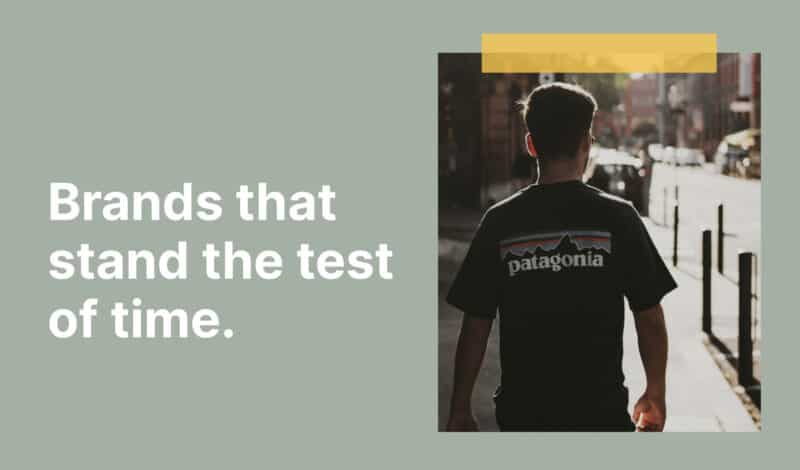
Another brand that has stood the test of time is Patagonia. 

Throughout its 48 years, Patagonia has stuck to its guns and never once swayed from its mission, ‘to be in business to save our home planet’.

One of the most powerful quotes we really admire was by founder Yvon Chouinard:

“You can’t reverse into a mission and values through marketing. The organisations that are struggling with this are probably the ones that are thinking about marketing first. The role of marketing is to authentically elevate that mission and purpose and engage people in it, but the purpose needs to be the business.”

Focusing on remaining brand-led and forging its own path based on the brand’s purpose rather than responding to the demands of its consumers has granted Patagonia’s long-standing success. 

The brand never wanted to be in business to mass-produce clothing that would impact the environment and has demonstrated that promise in some pretty expressive ways.

Patagonia turned Black Friday on its head with its ‘Don’t Buy This Jacket’ campaign. 

If you managed to miss the ad featured in The New York Times, Patagonia straight up called out consumerism. 

The company got major attention for trying to achieve the complete opposite of every other Black Friday campaign that year. Patagonia restated its purpose and in doing so, solidified itself as a brand doing good for the rest of the world. 

Patagonia has never faulted in its mission to work for environmental change. Though there have been calls for the company to become publicly listed, Patagonia has responded with a hard ‘No’ in a bid to avoid ‘selling out’ to people who don’t share their values.

Patagonia’s authentic purpose has been the powerhouse behind its success, never failing to impress its passionate followers.

We love your work, Patagonia!

Vegemite

If you grew up without Vegemite in your cupboard, we’re sorry to say, but you’re well and truly in the minority. Since its inception in 1923, Vegemite has secured itself as the spread for Australians and has dominated the condiment market ever since.

So, how did Vegemite, a rather simple product made from leftover brewers’ yeast extract, and founded by an American, make it as one of the most well-known brands in Australia to this day?

Well, they positioned themselves that way.

However, it wasn’t all smooth sailing for Vegemite. The brand had to overcome numerous setbacks before finding its feet. 

In the lead up to the brand’s success, Vegemite faced some harsh backlash for failing to take down the market leader at the time, Marmite. However, Vegemite stayed true to itself and believed in its superior product to remain undiscouraged by its numerous failed branding attempts. 

Vegemite took a step back to reevaluate its purpose. 

Rather than selling a relatively healthy product packed with vitamins or putting up a petty fight with the current market leader, Vegemite was now in the business of fuelling the Australian spirit.

Eventually, after increasing the brand’s exposure through various competitions, and official endorsement by the British Medical Association, Vegemite became a staple in the ration packs for Australian soldiers during World War 2, reinventing itself as a patriotic symbol of Australia.

“Vegemite: Keeping fighting men fighting fit”

Since then, they’ve cast their entire focus on serving Australian soldiers, fathers, wives and children. 

Cue the famous jingle, ‘happy little vegemite’.

The jingle won our hearts, and even today remains the secondary anthem of our nation, simplifying the choice of spreads for generations of Aussie families.

Nowadays, Vegemite is not only our nation’s spread of choice but a mark of pride and ownership as an Australian.

So, what do these brands have in common?

They each have a concrete purpose that drives every business and brand decision.

To create a strong brand that stands the test of time, you need to first determine why you’re in business. Establishing your ‘why’ helps you to define a clear and compelling promise. This is the most fundamental step in establishing a strong brand.

From here is where the magic happens.

Zoe is our bright and bubbly Marketing Manager who keeps the cogs turning across an expansive and diverse client portfolio. 

After finishing high school, Zoe caught a serious case of the travel bug, which saw her travel across the globe to work at a boarding school in the UK for 12 months. During her time abroad, she discovered her passion for Marketing and Behavioural Science, and soon after, she set off back to New Zealand to study at Otago University in Dunedin.

(more…)

P

(07) 5576 7841

E

hello@lemontreemarketing.com.au

Fill in your details and we’ll be in touch