By Ben Whitmore, Lemon Tree Agency Manager

Are you in business for the now or for the future? 

With so many tactical trends focused on generating sales today, brands often neglect to plan for the future – namely an organic future that relies more heavily on affinity and connection than immediate sales and paying to play. 

Google ads, Facebook, Instagram, email marketing, retargeting – they’re all great tools for generating sales and understanding your ROI. But what they’re not so great at doing is building your brand equity for future sales.

[vc_separator type=’full_width’ position=’center’ color=’#f2f2f2′ thickness=’1′ up=’40’ down=’40’]

Emotional vs functional marketing

Who is your ideal customer and how does your product help them? How does it make them feel? Are your products disposable or long-lasting and sentimental?

Disposable products do well in a see-ad-buy-now landscape because they don’t generally evoke a lot of emotion upon purchase. A well-made jacket or pair of shoes, on the other hand, may instil the sort of sentimentality that keeps consumers coming back to you for decades to come (and bypassing the paid-for ads to do so).

Think about your childhood. Can you still remember the jingles that marked the ads between your favourite TV shows? As a kid, I would religiously watch the Sydney to Hobart yacht race with my family. All those sponsor brands taking pride placement upon the sails of the leading maxis meant nothing to me then. For all I knew, “Ella Bache” or “Tag Heuer” were likely just the names of the boats and held no significance to a 10-year-old. 

Yet 20-something years later, when I see these brands, I’m transported back to those times and naturally feel an affinity toward them. Sure, 20-years may be a long-reaching strategy, but it’s important to think, at least a little, about this when setting your budgets and planning out your marketing activities. After all, it’s so easy to simply put your money into the digital funnel where X money goes in and Y comes out. However, thinking into the future, will this strategy evoke any kind of affinity towards your brand or products? 

Hoe Speeltips de Veiligheid van Betaalmethoden bij Online Casino’s Beoordeelt

De veiligheid van betaalmethoden bij online casino’s is een onderwerp dat veel spelers bezighoudt, en terecht. Wanneer je geld stort of opneemt via een digitaal platform, wil je er zeker van zijn dat je financiële gegevens beschermd zijn en dat transacties betrouwbaar verlopen. Het beoordelen van betaalmethoden vereist echter meer dan alleen kijken of een betaaloptie beschikbaar is. Er spelen tientallen factoren mee, van encryptietechnologie en vergunningseisen tot verwerkingstijden en terugboekingsbeleid. In dit artikel wordt uitgelegd welke criteria en methoden worden gebruikt om de veiligheid van betaalopties bij online casino’s grondig te beoordelen, en waarom sommige betaalmethoden als betrouwbaarder worden beschouwd dan andere.

De technische grondslagen van veilige betalingen bij online casino’s

Een betrouwbare beoordeling van betaalmethoden begint bij de technische infrastructuur die een betaalsysteem ondersteunt. Het meest fundamentele aspect is encryptie. Vrijwel alle serieuze online casino’s maken gebruik van SSL-encryptie (Secure Sockets Layer) of het modernere TLS-protocol (Transport Layer Security). TLS 1.3, dat in 2018 door de Internet Engineering Task Force werd gestandaardiseerd, biedt aanzienlijk sterkere beveiliging dan eerdere versies en vermindert de kans op zogeheten man-in-the-middle-aanvallen. Bij het beoordelen van een betaalmethode wordt dan ook nagegaan of de bijbehorende betaalprovider gebruikmaakt van actuele encryptiestandaarden en niet verouderde protocollen zoals SSL 3.0 of TLS 1.0, die al jaren als onveilig worden beschouwd.

Naast encryptie is tokenisatie een steeds belangrijker beveiligingsmechanisme. Bij tokenisatie worden de werkelijke betalingsgegevens, zoals een creditcardnummer, vervangen door een unieke reeks tekens die alleen bruikbaar is binnen een specifiek systeem. Dit betekent dat zelfs als een aanvaller toegang krijgt tot de opgeslagen transactiedata van een casino, de originele bankgegevens niet kunnen worden herleid. Betaalproviders als Visa en Mastercard hebben tokenisatie verplicht gesteld voor transacties via hun netwerken, maar de implementatie verschilt per aanbieder. E-wallets zoals PayPal, Skrill en Neteller voegen een extra beveiligingslaag toe doordat spelers hun bankgegevens nooit rechtstreeks met het casino hoeven te delen.

Tweeledige verificatie (2FA) is een ander criterium dat serieus wordt meegewogen. Betaalproviders die optionele of verplichte 2FA aanbieden, scoren hoger op veiligheid dan providers die uitsluitend afhankelijk zijn van een gebruikersnaam en wachtwoord. Dit is met name relevant voor e-wallets en cryptovaluta-wallets, waar een inbreuk op het account directe financiële gevolgen kan hebben. De aanwezigheid van biometrische authenticatie, zoals vingerafdruk- of gezichtsherkenning bij mobiele betalingen, wordt eveneens als positief criterium beschouwd.

PCI DSS-compliance is verplichte kost voor elke serieuze betaalprovider. De Payment Card Industry Data Security Standard, beheerd door de PCI Security Standards Council, stelt strenge eisen aan de opslag, verwerking en overdracht van kaarthoudergegevens. Providers worden ingedeeld in niveaus op basis van het aantal transacties per jaar, waarbij de hoogste niveaus de meest uitgebreide audits vereisen. Een betaalmethode die niet PCI DSS-gecertificeerd is, scoort onmiddellijk laag op veiligheidsbeoordeling, ongeacht andere kwaliteiten.

Regulering, vergunningen en jurisdictiefactoren

De veiligheid van een betaalmethode kan niet los worden gezien van de juridische omgeving waarin zowel de betaalprovider als het casino opereert. Een betaalmethode kan technisch gezien uitstekend beveiligd zijn, maar als de bijbehorende provider opereert vanuit een jurisdictie zonder adequate financiële toezichtwetgeving, biedt dit weinig bescherming voor de speler. Bij het beoordelen van betaalmethoden wordt dan ook systematisch gekeken naar de vergunningsstatus van de betaalprovider zelf.

In Europa zijn betaalproviders die actief zijn in de online goksector onderworpen aan de Payment Services Directive 2 (PSD2), die in 2018 volledig van kracht werd. PSD2 vereist onder meer sterke klantauthenticatie (SCA) voor online betalingen boven bepaalde drempelwaarden en stelt eisen aan de scheiding van klantgelden van bedrijfsmiddelen. Dit laatste is cruciaal: als een betaalprovider failliet gaat, moeten de gelden van klanten gescheiden zijn en dus beschermd zijn tegen claims van schuldeisers. Providers die onder toezicht staan van de Europese Bankautoriteit (EBA) of nationale equivalenten zoals De Nederlandsche Bank (DNB) of de Financial Conduct Authority (FCA) in het Verenigd Koninkrijk, bieden aanzienlijk sterkere garanties dan providers in minder gereguleerde markten.

De Kansspelautoriteit (KSA) in Nederland speelt een bijzondere rol in dit verband. Sinds de inwerkingtreding van de Wet kansspelen op afstand (Koa) op 1 oktober 2021 mogen online casino’s die op de Nederlandse markt actief zijn uitsluitend samenwerken met betaalproviders die door de KSA zijn goedgekeurd. Dit heeft geleid tot een aanzienlijke sanering van het aanbod, waarbij providers die niet voldeden aan de eisen zijn verdwenen uit het legale circuit. Bij het beoordelen van betaalmethoden wordt dan ook expliciet nagegaan of een provider op de goedgekeurde lijst staat en of het casino zelf over een geldige KSA-vergunning beschikt.

De beoordelingsmethodologie die wordt gehanteerd door platforms zoals Speeltips houdt rekening met zowel de vergunningsstatus van het casino als de regulering van de betaalprovider, omdat beide elementen samen de totale veiligheid voor de speler bepalen. Een vergunde casino kan immers samenwerken met een betaalprovider die zelf onvoldoende gereguleerd is, wat risico’s met zich meebrengt voor de verwerking van terugboekingen en de bescherming van klantgelden.

Cryptovaluta vormen een bijzondere categorie in het regulatoire landschap. Bitcoin, Ethereum en stablecoins als USDT worden door steeds meer online casino’s geaccepteerd, maar de regulering van crypto-betalingen verschilt sterk per jurisdictie. In de Europese Unie treedt de Markets in Crypto-Assets Regulation (MiCA) gefaseerd in werking tussen 2024 en 2025, wat voor het eerst een geharmoniseerd regelgevend kader biedt voor crypto-activadiensten. Tot die tijd worden cryptobetaalmethoden strenger beoordeeld op alternatieve veiligheidsmaatregelen, zoals de reputatie van de crypto-exchange, de aanwezigheid van koude opslag voor klantfondsen en de beschikbaarheid van geschillenbeslechting.

Transactiesnelheid, terugboekingsbeleid en fraudebescherming

Veiligheid bij betalingen gaat niet alleen over het voorkomen van datalekken of ongeautoriseerde toegang. Operationele veiligheid, ofwel de mate waarin een speler controle heeft over zijn geld en beschermd is bij geschillen, is minstens zo belangrijk. Verwerkingstijden zijn hierbij een indicator: betaalmethoden die stortingen onmiddellijk verwerken maar opnames dagenlang laten wachten, creëren een ongelijke situatie die spelers kwetsbaar maakt.

De terugboekingsmogelijkheden van een betaalmethode worden als een kritisch veiligheidskenmerk beschouwd. Creditcards bieden via het chargeback-mechanisme van Visa en Mastercard een relatief sterke bescherming: als een casino weigert een legitieme opname te verwerken, kan de speler via de kaartmaatschappij een terugboeking aanvragen. Dit mechanisme heeft echter beperkingen in de gokcontext, omdat kaartmaatschappijen strenge regels hanteren over welke transacties in aanmerking komen voor chargebacks. Bankoverschrijvingen bieden in het algemeen minder bescherming, terwijl e-wallets als PayPal hun eigen geschillenbeslechtingsprocedures hebben die soms effectiever zijn dan die van traditionele banken.

Fraudedetectiesystemen vormen een ander beoordelingscriterium. Geavanceerde betaalproviders maken gebruik van machine learning-algoritmen die transactiepatronen in real time analyseren en afwijkingen signaleren. Visa’s Advanced Authorization-systeem verwerkt bijvoorbeeld meer dan 500 parameters per transactie om frauderisico’s te beoordelen. Bij het evalueren van betaalmethoden wordt nagegaan of de provider dergelijke systemen inzet en hoe snel verdachte transacties worden geblokkeerd en de speler wordt geïnformeerd.

Limieten en kosten zijn eveneens relevante veiligheidsfactoren, zij het indirect. Betaalmethoden zonder duidelijke limietstructuren of met ondoorzichtige kostenstructuren maken het moeilijker voor spelers om overzicht te houden over hun financiële activiteiten. Verantwoord gokken vereist financieel overzicht, en betaalmethoden die dit bemoeilijken, scoren lager op de algehele veiligheidsbeoordeling. De KSA verplicht vergunde casino’s bovendien om spelers de mogelijkheid te bieden stortingslimieten in te stellen, en betaalmethoden die deze functionaliteit technisch ondersteunen, worden positiever beoordeeld dan methoden waarbij dit niet mogelijk is.

Anonimiteit is een tweesnijdend zwaard in de veiligheidsbeoordeling. Prepaid-kaarten zoals Paysafecard en bepaalde cryptovaluta bieden een hoge mate van anonimiteit, wat voor sommige spelers een voordeel is. Vanuit veiligheidsperspectief brengt anonimiteit echter risico’s met zich mee: bij verlies of diefstal van een prepaid-kaart is er geen mechanisme om de waarde te herstellen, en cryptotransacties zijn in principe onomkeerbaar. Deze eigenschappen worden meegewogen in de beoordeling, waarbij de voordelen van anonimiteit worden afgezet tegen de risico’s van verminderde bescherming bij geschillen.

Praktische beoordelingsmethoden en de rol van onafhankelijke verificatie

Een theoretische analyse van betaalmethoden is onvoldoende voor een betrouwbare beoordeling. In de praktijk worden betaalmethoden ook empirisch getest, waarbij daadwerkelijke stortingen en opnames worden uitgevoerd om de werkelijke verwerkingstijden, eventuele verborgen kosten en de gebruikerservaring bij geschillen te meten. Dit is een tijdrovend maar essentieel onderdeel van het beoordelingsproces, omdat de werkelijkheid soms sterk afwijkt van wat casino’s en betaalproviders communiceren.

Bij empirische tests wordt gelet op de consistentie van verwerkingstijden. Een casino dat claimt opnames binnen 24 uur te verwerken, wordt over meerdere transacties en tijdsperioden getest om te zien of deze belofte wordt nagekomen. Variaties in verwerkingstijden, met name rondom weekenden of feestdagen, worden gedocumenteerd. Eveneens wordt getest of de verificatieprocedures van het casino proportioneel zijn: KYC (Know Your Customer) verificatie is wettelijk verplicht, maar casino’s die buitensporig veel documentatie eisen of verificatieprocessen onnodig vertragen, creëren onnodige obstakels voor spelers die hun geld willen opnemen.

Onafhankelijke audits spelen een cruciale rol in de veiligheidsbeoordeling. Organisaties als eCOGRA, iTech Labs en GLI (Gaming Laboratories International) voeren audits uit op online casino’s en hun betaalinfrastructuur. Een casino dat gecertificeerd is door een van deze organisaties heeft aangetoond dat zijn systemen aan bepaalde normen voldoen. Bij het beoordelen van betaalmethoden wordt dan ook nagegaan of de betaalprovider zelf onderworpen is aan externe audits en of de resultaten daarvan openbaar beschikbaar zijn. Providers die audits vermijden of de resultaten niet publiceren, worden als minder transparant en daarmee minder veilig beschouwd.

Gebruikerservaringen en klachtenpatronen worden eveneens systematisch geanalyseerd. Klachtenplatforms zoals AskGamblers, Casinomeister en de officiële klachtenprocedures van toezichthouders bieden waardevolle informatie over de werkelijke ervaringen van spelers met specifieke betaalmethoden bij specifieke casino’s. Herhalende klachten over vertraagde opnames, onverklaarbare transactiekosten of weigering van terugboekingen zijn rode vlaggen die zwaar wegen in de uiteindelijke beoordeling. Statistische analyse van klachtenpatronen over een periode van minimaal 12 maanden geeft een betrouwbaarder beeld dan incidentele meldingen.

De beoordeling van betaalmethoden is geen statisch proces. De betaallandschap evolueert snel: nieuwe technologieën zoals open banking, dat via PSD2 in Europa wordt gestimuleerd, veranderen de manier waarop betalingen worden verwerkt. Open banking maakt directe bank-tot-bank-betalingen mogelijk zonder tussenkomst van een kaartnetwerk, wat zowel voordelen (lagere kosten, snellere verwerking) als nieuwe veiligheidsoverwegingen met zich meebrengt. Betaalmethoden worden dan ook periodiek opnieuw beoordeeld om te reflecteren op technologische ontwikkelingen, wijzigingen in regelgeving en veranderingen in de marktpraktijk.

Een grondige beoordeling van de veiligheid van betaalmethoden bij online casino’s is een complexe, meerdimensionale taak die technische expertise, juridische kennis en praktijkervaring vereist. Spelers die bewuste keuzes willen maken over welke betaalmethode zij gebruiken, doen er goed aan zich te informeren via bronnen die deze meerdimensionale benadering hanteren, waarbij zowel de technische beveiliging als de regulatoire bescherming en de operationele betrouwbaarheid van betaalmethoden worden meegewogen. Alleen een integrale aanpak leidt tot een eerlijk en volledig beeld van de werkelijke veiligheid die een betaalmethode biedt in de context van online gokken.

As the digital world becomes increasingly dominant, we find that many businesses are making these short-term investments without considering the future or how they’d be able to weather the storm if one of these channels were to fold. You may have other channels to invest in, but at the end of the day, it’s the longer-term investments that will build a timeless and enduring brand and loyal customer base.  

[vc_separator type=’full_width’ position=’center’ color=’#f2f2f2′ thickness=’1′ up=’40’ down=’40’]

The power of long-term thinking for building brand affinity

As consumers, we all love to signal. Signal our status, signal which tribe we belong to or signal our values, so we seek out and borrow from brands that can help us to do just that. This is another reason long-term brand building is so important. 

When you get to a point where several brands are offering the same potential for signalling, however, it’s only that affinity and brand equity that will set you apart. A childhood memory, a love for a particular sport or celebrity that your brand is associated with. Or perhaps it’s a particular campaign or design that speaks directly to the heart of your customer. One thing we do know is that it’s rarely (if ever) that keyword-optimised ad you ran on Google or the Instagram story you posted months ago that will build a deep loyalty to your brand. 

Don’t get me wrong, those activities are an important tap on the shoulder to remind customers that you’re there. But often it’s not just your products that they want to buy, it’s what they represent and how customers can use them to market themselves to the world in a similar way.

Here’s an example.

There are plenty of coats and at all kinds of price points that will do the job of keeping you warm. But when a customer pulls on a Patagonia jacket, they’re signalling to the world that they live for the outdoors and care about the environment. You could just as easily get yourself to work in a Toyota, but when someone steps into a BMW, they’re signalling success and status. 

Why? Because of good brand building. Over a long period of time, we’ve learnt or we’ve interpreted through their marketing and brand representation, that this is what these companies represent. So when we want to be represented the same way, we know exactly where to go and who to spend our money with to do so. It may be a 20 or 30-year journey to conversion, but this is the pay off for the long term investment that these brands’ make through collaborations, sponsorships, and countless campaigns where they’re not only speaking to today’s customer but also their customers of the future.

[vc_separator type=’full_width’ position=’center’ color=’#f2f2f2′ thickness=’1′ up=’40’ down=’40’]

So next time you’re planning out your calendar, ask yourself what’s really most important for you, your business and your brand, and have a think about how you can diversify your activities to include both short and long term strategies. 

Neky is our newest, quirkiest and (I think we would all agree) funniest addition to our Creative team.

(more…)

Your brand is the foundation upon which your entire business is built. It’s the instinctual feeling people have about who you are and what you do.

Your brand values, on the other hand, are the foundation from which all other brand elements should flow. They serve as your guiding principles, helping you to separate right from wrong and allowing you to find clarity on the things that really matter to your business. 

Disclaimer: Before we dig into the tremendous value that stems from articulating your values, we want to make something really (really) clear. When we talk about brand values, we’re not talking about those fluffy (and often generic) words found on the about page of a website that no one outside of the leadership team has ever heard of.

The kind of values we’re talking about are the deep and meaningful kind. The ones that are truly authentic, actionable and timeless. The kind that aren’t just words on a page but words to live by.

Now that we’ve cleared that up, let’s dig in!

01 Brand values encourage brand loyalty

L’histoire des machines à sous en ligne expliquée par les spécialistes

L’essor des jeux de casino en ligne a profondément transformé l’industrie du divertissement numérique depuis le milieu des années 1990. Parmi tous les types de jeux proposés sur les plateformes virtuelles, les machines à sous occupent une place dominante, représentant aujourd’hui plus de 70 % des revenus générés par les casinos en ligne à l’échelle mondiale. Pour comprendre comment ces jeux sont devenus aussi omniprésents, il convient de revenir sur leur trajectoire historique, depuis les premières tentatives de numérisation jusqu’aux expériences immersives d’aujourd’hui.

Des origines mécaniques à la révolution numérique

L’histoire des machines à sous débute bien avant l’ère d’Internet. C’est en 1891 que Sittman et Pitt, deux fabricants new-yorkais, développèrent un précurseur direct de la machine à sous moderne : un appareil à cinq tambours affichant des cartes à jouer, installé dans les bars de Brooklyn. Quelques années plus tard, en 1895, Charles Fey conçut à San Francisco la première machine à sous mécanique véritablement automatisée, la Liberty Bell, capable de distribuer des gains sans intervention humaine. Ce mécanisme à trois rouleaux et cinq symboles — fers à cheval, diamants, piques, cœurs et la fameuse cloche — posa les bases d’un modèle qui allait traverser le siècle.

Pendant des décennies, les machines à sous restèrent des dispositifs purement mécaniques, puis électromécaniques à partir des années 1960, lorsque Bally Technologies introduisit Money Honey, la première machine à sous entièrement électronique. Ce changement technologique permit d’augmenter significativement le nombre de combinaisons possibles et d’introduire de nouveaux effets sonores et lumineux. En 1976, Fortune Coin Co. développa la première machine à sous vidéo, intégrant un écran cathodique à la place des rouleaux physiques. Cette innovation fut rapidement rachetée par IGT (International Game Technology), qui standardisa le format vidéo dans les casinos terrestres à partir des années 1980.

La transition vers le numérique s’accéléra avec l’avènement d’Internet dans les années 1990. En 1994, la société Microgaming, basée sur l’île de Man, lança ce qui est généralement reconnu comme le premier logiciel de casino en ligne fonctionnel. L’année suivante, en 1996, le premier casino en ligne acceptant des mises réelles ouvrit ses portes, proposant déjà une sélection de machines à sous virtuelles. Ces premières versions étaient rudimentaires comparées aux standards actuels, mais elles établirent un cadre technique et commercial qui allait évoluer rapidement.

La structuration réglementaire et la montée en puissance du secteur

Le développement des jeux en ligne ne s’est pas fait sans heurts sur le plan juridique. Dès 1994, le gouvernement d’Antigua-et-Barbuda adopta le Free Trade and Processing Act, l’une des premières législations au monde à autoriser la délivrance de licences pour les casinos en ligne. Cette décision attira de nombreux opérateurs dans les juridictions offshore, créant un secteur largement non régulé pendant plusieurs années. Face à cette situation, plusieurs pays européens commencèrent à légiférer de manière plus stricte à partir du début des années 2000.

Le Royaume-Uni fut l’un des pionniers en matière de régulation avec le Gambling Act de 2005, qui entra en vigueur en 2007 et créa la UK Gambling Commission, une autorité indépendante chargée de superviser l’ensemble des activités de jeu, y compris les plateformes en ligne. Malte suivit une trajectoire similaire avec la Malta Gaming Authority (MGA), fondée en 2001, qui devint l’une des références mondiales en matière de certification des opérateurs. Ces cadres réglementaires imposèrent des exigences strictes en matière de transparence des algorithmes, de protection des joueurs et de lutte contre le blanchiment d’argent.

En France, la régulation du jeu en ligne fut longtemps restrictive. La loi du 12 mai 2010 relative à l’ouverture à la concurrence et à la régulation du secteur des jeux d’argent et de hasard en ligne créa l’Autorité de régulation des jeux en ligne (ARJEL), remplacée depuis 2020 par l’Autorité nationale des jeux (ANJ). Cette législation autorisa certaines formes de jeux en ligne comme le poker et les paris sportifs, mais maintint l’interdiction des machines à sous en ligne pour les opérateurs souhaitant cibler spécifiquement le marché français. C’est pourquoi de nombreux joueurs francophones se tournent vers des plateformes licenciées à Malte ou à Gibraltar, où l’offre de machines à sous en ligne est pleinement encadrée par des autorités reconnues à l’échelle européenne.

L’évolution technologique des machines à sous virtuelles

Sur le plan purement technique, les machines à sous en ligne ont connu des mutations considérables depuis leurs débuts. Les premières versions numériques reproduisaient fidèlement le modèle à trois rouleaux hérité des appareils mécaniques. À partir de la fin des années 1990, les développeurs commencèrent à exploiter les possibilités offertes par le numérique pour créer des formats inédits : cinq rouleaux, puis sept, des grilles de jeu non linéaires, des mécaniques de type Megaways développées par Big Time Gaming en 2015, permettant jusqu’à 117 649 façons de gagner sur une seule mise.

L’introduction des générateurs de nombres aléatoires (GNA ou RNG en anglais) fut déterminante pour assurer l’équité des jeux. Ces algorithmes, soumis à des audits réguliers par des organismes indépendants comme eCOGRA (fondé en 2003) ou iTech Labs, garantissent que chaque résultat est statistiquement indépendant des tours précédents. Le taux de retour au joueur (RTP, Return to Player) est devenu un indicateur standardisé : la plupart des machines à sous en ligne affichent des RTP compris entre 94 % et 98 %, contre une moyenne de 75 % à 85 % pour les machines physiques dans certains États américains. Cette transparence algorithmique constitue l’une des différences fondamentales entre le jeu en ligne et le jeu terrestre.

Les années 2010 marquèrent l’essor des machines à sous sur mobile. En 2012, les connexions mobiles représentaient moins de 10 % du trafic vers les casinos en ligne. En 2022, cette proportion avait dépassé 60 % selon les données publiées par l’European Gaming and Betting Association (EGBA). Cette transition imposa aux développeurs de repenser entièrement leurs interfaces, passant du format Flash — abandonné définitivement en décembre 2020 — au HTML5, compatible avec l’ensemble des appareils et systèmes d’exploitation. Des studios comme NetEnt, Play’n GO et Pragmatic Play investirent massivement dans cette transition, redessinant leurs catalogues entiers pour s’adapter aux écrans tactiles.

Plus récemment, l’intégration de fonctionnalités issues du jeu vidéo a profondément modifié l’expérience proposée aux joueurs. Les systèmes de progression, les modes bonus à plusieurs niveaux, les cinématiques narratives et les personnages récurrents ont rapproché les machines à sous modernes des jeux de rôle. L’émergence des jackpots progressifs en réseau, comme la série Mega Moolah de Microgaming — qui établit un record mondial en 2018 avec un gain de 18,9 millions d’euros accordé à un seul joueur — illustre également la dimension communautaire que peut prendre ce type de jeu à l’ère numérique.

Les tendances actuelles et les perspectives d’avenir

L’une des évolutions les plus significatives de ces dernières années concerne les casinos en direct (live casinos), qui cherchent à recréer l’atmosphère des établissements physiques grâce à des flux vidéo en temps réel. Si ce format s’applique principalement aux jeux de table comme le blackjack ou la roulette, des tentatives d’adaptation aux machines à sous ont émergé sous forme de game shows interactifs. Des titres comme Crazy Time ou Monopoly Live, développés par Evolution Gaming, empruntent la mécanique des roues de fortune tout en intégrant des éléments propres aux machines à sous traditionnelles.

La technologie blockchain et les cryptomonnaies ont également commencé à influencer le secteur. Depuis 2017, plusieurs plateformes proposent des jeux basés sur des contrats intelligents (smart contracts), dont les résultats sont vérifiables publiquement sur la chaîne de blocs. Cette approche, connue sous le nom de “provably fair gaming”, offre un niveau de transparence supérieur aux audits traditionnels, bien que son adoption reste limitée à une niche de joueurs technophiles. La question de la régulation de ces plateformes décentralisées reste ouverte dans la plupart des juridictions.

Par ailleurs, les régulateurs européens ont renforcé leurs exigences en matière de jeu responsable. La directive de la UK Gambling Commission publiée en 2021 a imposé des limites de vitesse minimales pour les machines à sous en ligne (au moins 2,5 secondes par tour), ainsi que l’interdiction des fonctionnalités susceptibles d’accélérer le jeu ou de masquer les pertes. Des mesures similaires ont été adoptées par la MGA et plusieurs régulateurs scandinaves, reflétant une prise de conscience croissante des risques d’addiction liés à la rapidité et à l’accessibilité des jeux numériques.

L’histoire des machines à sous en ligne est ainsi indissociable de l’histoire plus large de la régulation du jeu, de l’évolution des technologies numériques et des transformations des comportements de consommation. En l’espace de trois décennies, ces jeux sont passés de simples reproductions numériques de mécanismes mécaniques centenaires à des expériences interactives complexes, encadrées par des législations de plus en plus précises et soumises à des audits techniques rigoureux. Comprendre cette trajectoire permet de mieux appréhender les enjeux actuels du secteur, qu’il s’agisse de protection des consommateurs, de développement technologique ou de gouvernance internationale du jeu en ligne.

In a time when competition floods almost every market (thanks internet), we need to find ways to differentiate ourselves from those operating in the same space. But that doesn’t mean developing a new product or creating a really distinctive logo – because these things can easily be replicated. 

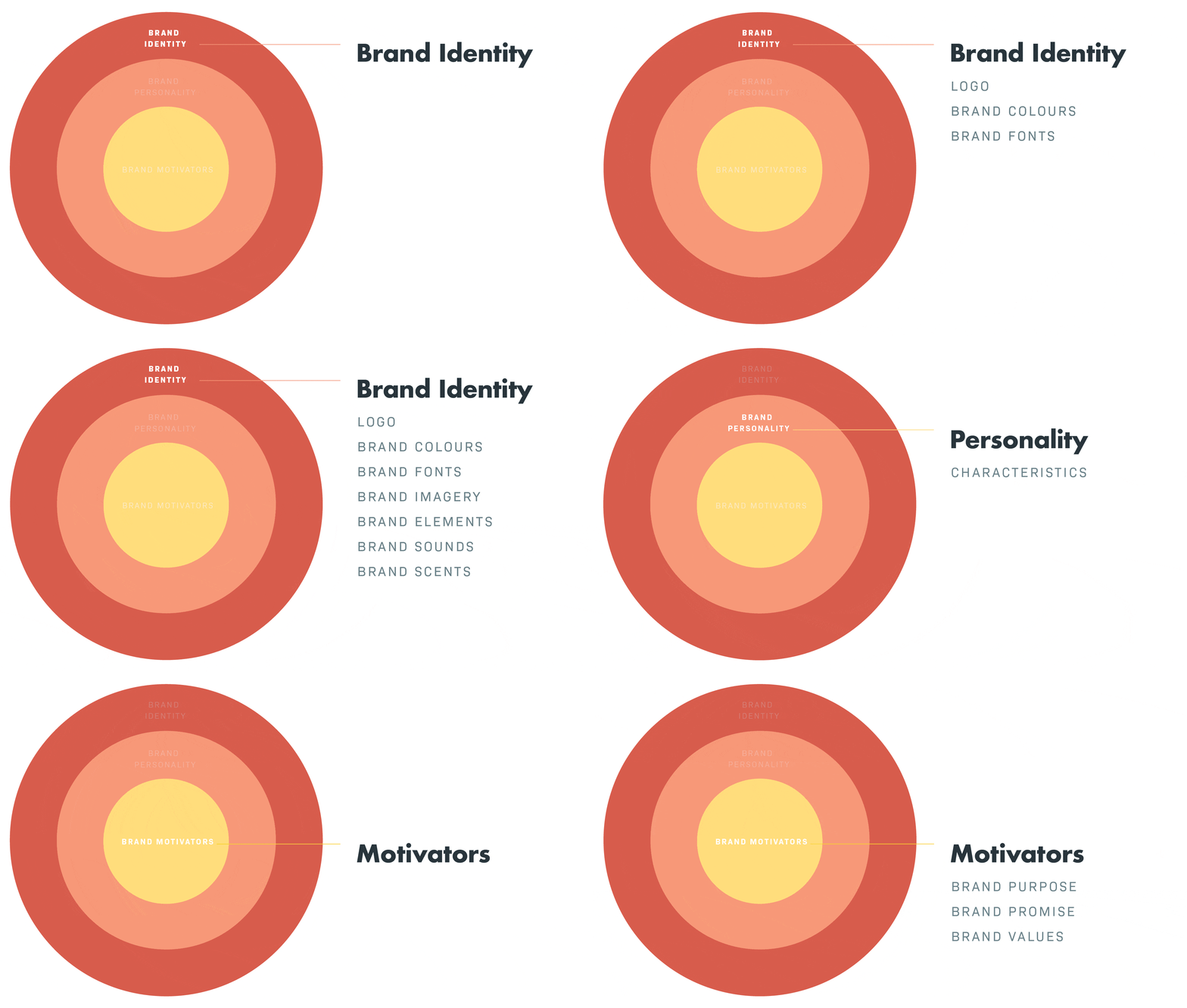
By differentiation, we mean the things that no one else can offer because they’re utterly unique to your brand. And these things are your brand purpose, your brand promise and your brand values

Of course, external attributes like your brand identity and personality are incredibly important, too. They help to establish awareness and encourage familiarity with your brand. They also help your audience develop a certain level of affinity and maybe even loyalty.

But to connect with your audience on a deeper level in a way that no other business can, you need to tap into the intrinsic elements that motivate your brand. The ones that give meaning to what you do and support you in driving change. And when you can articulate these in a way that really resonates with your audience? Well, there’s nothing more powerful than that for creating deeply loyal customers.

02 Brand values help to guide business and partnership decisions

Having a clearly defined set of brand values is really handy for assessing business decisions and partnership opportunities for alignment with where you’re headed as a brand. 

Consider this. You’re an up and coming e-commerce brand that prides itself on sourcing eco-friendly products from local manufacturers. Part of the reason you exist is to support these small businesses and to encourage consumers to spend their money on goods that have little impact on the planet. As business starts taking off, a manufacturer with an awesome product (at a great price) reaches out in the hopes you’ll take on their stock. But once you dig a little deeper, you learn that some of the manufacturing processes are pretty harmful – despite the materials themselves meeting your eco-friendly criteria. 

Of course, you could argue that the products themselves live up to your standards. But as one of your core values is to minimise impact on the environment, taking them on would mean falling short of the standards you set for yourself. And as well as being inauthentic to yourself, you’d be inauthentic to the customers who really resonate with your brand values. Sure, there would be some who might not care. But your loyal customers, the ones that make up a large chunk of your revenue are probably not going to be doing business with you again any time soon. 

I guess what we’re trying to say is that it’s pretty easy to jump the gun when an exciting opportunity presents itself. But think – is this decision likely to lead you closer to (or further away from) the brand you want to be?

That’s the power of articulating your brand values; they make it really easy to spot something that just isn’t the right fit for who you are as a brand. They ensure you stay true to your customers and that you don’t dilute the message of what you stand for – no matter how enticing an opportunity might seem.

03 Brand values give your employees a standard to live up to

For values to be truly authentic, they need to radiate through every interaction your customers have with your business – and that includes interactions with your employees. 

With clearly defined and articulated brand values, your employees have total clarity on how they’re expected to act and react when representing your business. With a clear understanding of what it means to embrace and embody your brand values, the chances of an employee contradicting your ideals drop dramatically and the authenticity of your brand values is more likely to remain intact.

With this in mind, brand values are a really good gauge to use during the hiring process and to assess whether a new recruit will align with the direction of your business. Articulating your brand values will also help to attract more of the people you want on your team while perhaps discouraging those that may not share your attitudes and beliefs.

04 The takeaway

At the end of the day, values are only as valuable as your ability to live by them. So before you set your values in stone, make sure to really think about how you’ll prove to your audience that they’re authentic.

Meet Josh, our resident Yogi and the king of fancy-dress!

(more…)

Now that the big day* is over, we can let you in on some of the secrets and industry best practices we applied to generate record-high sales for our clients.

So here they are (sshhh!) – our not-so-secret secrets:

  • We gave sales the spotlight across multiple touchpoints
  • We increased advertising budgets
  • We optimised websites
  • We used power words that sell
  • We scheduled ads in advance
  • *We didn’t see Black Friday as a one-day event
  • We turned Black Friday into Green Friday

01 We gave sales the spotlight across multiple touchpoints

Black Friday can feel a bit like a battle of discounts, but it’s actually a battle for attention. To win the battle, you need to get noticed. And to get noticed, you can’t rely on just one channel to communicate your sales.

In fact, the more channels you use (suited to your customer, of course), the better. Think organic posts, website banners/pop-ups, emails and ads. It goes without saying that messaging across these channels should be updated to ensure the sale on offer takes centre stage at all times.

The proof:
We applied a multi-channel approach with sales-focused messaging to the Black Friday campaign of a water cooler retailer and boosted their November sales by 109%.

02 We increased advertising budgets

Black Friday tends to be the most profitable time to run ads. Unfortunately, it’s also the most competitive. An increased ad budget ensures your brand can compete against the increased ad budgets of competitors.

The proof:
Boosting the social ad spend of an outdoor accessory brand by 55% resulted in a 213% increase in sales from social compared to last November. We increased the ad spend of a home decor brand and expanded from one to two advertising channels, yielding a 111% spike in its November sales.

03 We optimised websites

A website doesn’t have to completely crash for you to be left with frustrated customers and abandoned carts. In fact, 40% of customers will wait no longer than three seconds before leaving a site.

Brands need to be certain their website follows best user experience practices in the lead up to sale events. And, with 65% of Australian shoppers purchasing on mobile this Black Friday, it’s also crucial that websites cater to mobile shoppers.

04 We used power words that sell

We looked back on the year that was. Which messaging strategies proved most effective for our clients? Which words meant something to their customers? These power words, along with urgent messaging, triggered a sense of scarcity and pressure to boost conversion rates.

[vc_separator type=’full_width’ position=’center’ color=’#f2f2f2′ thickness=’1′ up=’40’ down=’40’]

05 We scheduled ads in advance

Scheduling ads at least a week before a sale event means you’ll be prepared to face any obstacle. Like this year, for example, when Facebook ads were plagued by a huge bug which saw ad buyers facing several error messages and delayed approval times.

06 We didn’t see Black Friday as a one-day event

Customers see Black Friday as a four-day long event extending through to Cyber Monday, but we know it’s important to build excitement long before the weekend approaches in order to optimise brand communications.

For existing customers, it’s a good idea to send out teaser emails, ensuring customers have your brand on their radar. To acquire new customers, run competitions and make use of website pop-ups offering VIP early access and exclusive discounts.

07 We turned Black Friday into Green Friday

One of our ethically-positioned clients was hesitant to participate in what some see as a consumerist frenzy. But hey – a sustainable brand needs to be sustainable in terms of profit too, right?

Using ethically-focused messaging, we redefined this day to be one of sustainable and mindful consumption. Talk about standing out.

The result?
Monthly sales doubled – all without compromising the client’s ethical values.

Need help coordinating and optimising your brand communications during sale time? Our team of skilled developers, creatives and digital specialists can do it with their eyes closed. And they’ve got tricks up their sleeves we weren’t allowed to share here. So let’s chat.

Connect with your audience through authentic communication

When thinking about your brand, you’ll probably find it pretty easy to define what it looks like. But how clearly can you define what your brand sounds like? This intangible aspect of your brand is known as your brand voice.

Your brand voice is the translation of your unique brand personality across all channels of communication. It’s the way you write or speak as a brand and is an incredibly valuable tool for connecting with your audience – so long as it’s developed strategically and executed consistently.

Just like a person, your brand should have consistent personality traits and patterns that are utterly characteristic of them. It’s one of the ways people become familiar with each other – and the same is true for your brand.

And ultimately? People connect with people. So to encourage your audience to form a meaningful connection with your brand, as they would a person, you’ll need to develop a really strong personality and brand voice that resonates with them.

How do you go about this? We’ll cover the hands-on process in the five steps below:

[vc_separator type=’full_width’ position=’center’ color=’#f2f2f2′ thickness=’1′ up=’40’ down=’40’]

01 Know your Audience

If you’re not sure who you’re talking to, there’s no way of knowing whether your personality, brand voice and content is resonating with your desired audience.

Even if you’ve got a fair handle on who you think your audience is, how much do you really know? People respond to content in different ways depending on their values, interests, life experiences and location (to name a few). This is why a key part of any brand foundation is to understand the subtleties of your audience.

As part of our brand-building process, we always start getting to know our audience with a generous dollop of consumer research. If you’re new to the process, some useful data points we like to dig into includes:

Demographics:
Where they live, age, gender, race, occupation, annual income, education, living status, family and dependants, etc

Psychographics:
Hobbies, interests, brands they love, platforms they’re on, content they consume, etc

Mindset:
Attitudes, opinions, lifestyle preferences, distinguishing characteristics, risk appetite, sense of humour, etc

Behavioural Insights:
How do they behave in relation to your business? What are their typical behavioural tendencies in general?

Customer Sentiment:
What does your current audience think of you? What do they say about your brand when you’re not around?

The thing about data….

The fact is, data is supposed to inform, not dictate, your brand and content strategy. And the thing about data is, it’s only ever as useful as your ability to analyse it. The goal here is to dig for insights that might not be so easily visible on the surface; that’s where the gold is.

Having a list of goals to help you analyse your findings is the easiest way to avoid overwhelm and make the most of your time in the research phase. We like to work with the following principles in mind:

  • Does your consumer data reflect who you want to serve, or who you’re serving now? If you’re in the process of focusing on a new audience, current customer research will be insightful to a point, but it won’t help guide you forward. Look for data that helps you understand your aspiration customers, and use that as the basis for your future plans.
  • Have you defined what is qualitative versus quantitative data? Qualitative data (i.e. emotions, attitudes, expressions) can paint a very different picture to quantitative data (i.e. hard numbers) and can sometimes be taken out of context.
  • Leave bias at the door. Assume nothing and back up your insights by at least 2-3 data sources before confirming it is indeed a gold nugget.


Make your insights accessible and relatable

Now that you’ve sifted through the data, you should have a tidy pile of tasty insights about your audience. But those insights will mean nothing if you don’t share them!

A handy way to make this information accessible and easily understood is to create user persona charts. Depending on your audience breakdown, you may have just one key persona, or you might have several. If you’re just starting out on your brand voice, it’s probably easier to have one primary persona. Over time, as you get used to writing on-brand, you can start to introduce others that might represent different segments of your audience.

As a plus, distilling your findings into their simplest, purest form is a great way to re-process what you’ve learned. So even if you’re the sole writer for your company, we recommend not to overlook this exercise.

[vc_separator type=’full_width’ position=’center’ color=’#f2f2f2′ thickness=’1′ up=’40’ down=’40’]

02 Know your Values

In just 5 years, the millennial generation will comprise three-quarters of the global workforce – which means they will soon be the largest group of consumers with income to spend. And if there’s one thing you need to know about millennials, it’s that they love brand authenticity.

They love it so much, in fact, that it’s one of the most significant influences on how they choose to spend their money.

 

How does this relate to brand messaging, you ask? Well, the only way to communicate authentically is to have something meaningful to say in the first place. And the best way to do this is to use your brand values as your guide.

Building Brand Values

Your brand values live at the core of your brand. They are your foundation, your bedrock, your why.

When clearly articulated, your brand values have the power to provide alignment, clarity and motivation to all who interact with your brand (both internally and externally).

Values should thread through all areas of brand communication. From the themes you talk about and your writing style, to the unique phrases and tone of voice in which you deliver them, brand values act as your goalposts for a winning game.

[vc_separator type=’full_width’ position=’center’ color=’#f2f2f2′ thickness=’1′ up=’40’ down=’40’]

03 Know your Purpose

People don’t buy what you do, they buy why you do it. Now that your brand values are set, build on those foundations so you can share your purpose (why you do what you do) in the form of a brand story.

A narrative writing style helps the human brain retain information better and recall it faster, which is why brand storytelling is hugely successful in the business space.

Common kick-starter questions we often ask our clients are:

  • Why does your business exist? Why did you choose to start it?
  • What keeps you coming back every day?
  • How are you solving the problem your customers face?
  • Why are you passionate about helping them?
  • What’s your vision for a brighter future?

Telling your story gives your brand a point of difference where one previously might not have existed. It also encourages your audience to recall your brand more easily and quickly than other industry competitors.

[vc_separator type=’full_width’ position=’center’ color=’#f2f2f2′ thickness=’1′ up=’40’ down=’40’]

04 Develop your personality & tone

Now we’ve covered brand foundations, let’s move to a more practical phase of the process. Developing your personality and tone of voice is absolutely critical. It’s the final piece of the puzzle for creating a unique and memorable brand voice that builds a connection between your audience and the values and ideals you stand for. It’s where the magic happens.

You’ll want to cover a few things in this area, such as:

  • Characteristics that describe your brand personality (4 – 6 is a good number)
  • Charting out these characteristics to translate them into copywriting guidelines
  • Key message examples and writing samples


Identifying your brand personality

Your brand personality should reflect all the work you’ve done thus far. It can help to imagine your brand as a real person; how would you want your brand (person) to be described by others? What are the quirks or significant characteristics that make them unique?

Come up with a big list of attributes that describe your brand personality, then refine it until you’ve settled on the top 4-6. Each word should bring something new and informative to the mix, giving your copywriters the ability to mentally map out the nuances of your brand character.

Charting it out

Once you’ve got your list of brand attributes, map them out in a chart or table. Each attribute should have a brief explanation (to avoid the assumption that everyone interprets that word the same way), as well as the practical dos and don’ts on how it manifests in terms of writing style.

Personality Spectrum

It’s great to have a chart and all, but how do you use it? Just like real people communicate, your brand needs to have the ability to tone up (or down) the level of personality to suit the environment.

We like to use a visual spectrum chart to guide our writers as to what level of personality they’ll be using for each channel of communication. We typically include:

  • Advertising
  • Marketing collateral
  • Website
  • Social media
  • Content marketing
  • Internal communications
  • Product
  • Signage
  • Educational content
  • Policies and procedures


Key Message Writing Samples

Last but not least, if there is ONE thing you take away from all this, it’s that leading by example is the most effective way to gain traction with an idea. Not just in writing, but in life (but that’s another story).

If you’ve got the time on your hands (if not, make the time), provide samples of copy for each segment of your personality spectrum. At the very least, make sure you cover examples that sit at the polar ends of your spectrum, and one in the middle zone for good measure.

[vc_separator type=’full_width’ position=’center’ color=’#f2f2f2′ thickness=’1′ up=’40’ down=’40’]

05 Start Talking!

Now that you’ve got clarity on how you want to communicate, it’s time to stop planning and start doing. While it might feel foreign to not write from ‘the heart’ in your own personal way, the more you practice writing in your brand voice, the more it will come naturally.

Need a little help?

Helping clients develop unique and authentic brand voices is central to what we do in the brand and marketing space. Our brand strategists and copywriters have spent years refining their process, working collaboratively with our clients to guide their brands on the path to success.

If you’re in search of a team that can help you build your brand, we’d love to meet you.

Meet Steph, our multi-talented and incredibly hardworking Content & Design Coordinator at Lemon Tree.

(more…)

You wouldn’t make important business decisions without considering all relevant data, right? 

You might feel confident and think you know your business like the back of your hand, but we can tell you right now without customer research you’ll be missing important opportunities left, right and centre.

Customer research gives you everything you need to know about your customers on a silver platter. 

Although conducting customer research can be intimidating for some, it’s so worth having reliable information to base your business decisions off.

That said, here’s how to conduct customer research (like a pro!).


(more…)

Good communication between a designer and client not only ensures that a project runs smoothly but lays the foundation for a great relationship which often results in added value for both parties.

A good relationship with your designer means a better understanding of your brand, your business and your personal preferences, which ultimately streamlines the process and results in better outcomes.

Ready to learn how to best communicate with your designer? Let’s jump into the interview with designer, Bianca Taylor-Andrews.
(more…)

P

(07) 5576 7841

E

hello@lemontreemarketing.com.au

Fill in your details and we’ll be in touch